




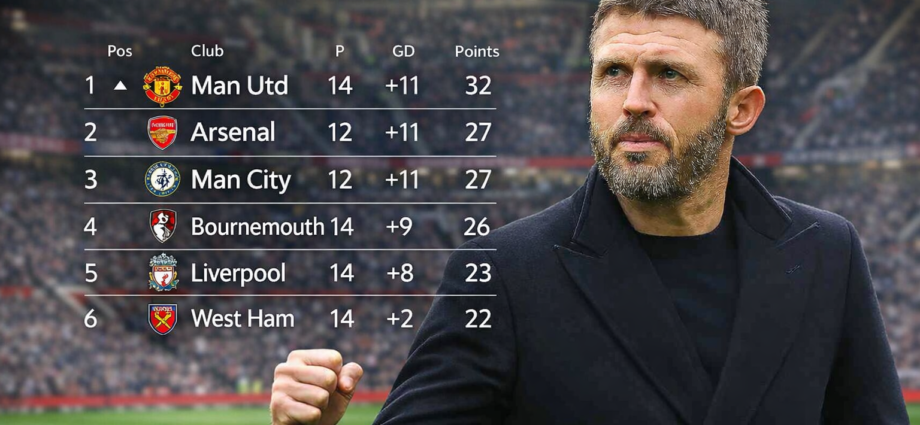
Carrick’s Command: United’s Season Transformed Through Structure and Control sets the tone for a remarkable turnaround driven by clarity and structure. Michael Carrick Manchester United stats highlight a manager who reshaped the team’s direction after arriving in January 2026. His influence appears in the results, the tactical identity and the renewed confidence across the squad.
Carrick’s Command: United’s Season Transformed Through Structure and Control
Carrick delivered 10 wins, two draws and two defeats across 14 Premier League matches. That return equals 2.29 points per match, placing him among the league’s most effective managers during that period. Independent tracking confirms the W10 D2 L2 record, reinforcing the stability he introduced after a turbulent first half of the season. United climbed into the top three with 64 points after 35 games, reflecting a clear rise in consistency and match control.
Tactical structure built on rhythm and balance
Carrick reinstated a 4‑2‑3‑1 system that mirrors the qualities he displayed as a midfielder. The shape restored balance in central areas and improved United’s ability to dictate tempo through possession. The double pivot strengthened defensive transitions, while the advanced midfield line supported sustained pressure in attacking zones. This structure reduced chaotic phases and allowed United to manage matches with greater authority.
A team shaped by clarity and identity
United now operate with organisation, discipline and confidence. The squad responds to Carrick’s defined principles, and performances show a team comfortable in its responsibilities. The improvement extends beyond results, signalling a broader shift in identity. Carrick didn’t simply stabilise the side; he elevated it. Manchester United now function with purpose and cohesion, positioning themselves as a competitive force again.